






Introduction

Nihao! I’m Fernando, an expat from Mexico who has spent over 12 years living, studying, and working in China. Over the years, I’ve noticed that friends, family, and clients always ask me the same questions before coming here. That’s why I decided to put together a practical guide to help first-time travelers to China prepare for entry, understand the lifestyle, use services, follow cultural norms, and travel during holidays or business trips. Basically, all you should know before traveling to China, all from real experiences and genuinely useful travel hacks that help you move around China like a local, even if it’s your first time.
This isn’t content from a travel blogger or influencer who spent two weeks in China and suddenly became an “expert.” These are real, insider tips from someone who actually lives here, honest, practical, and no nonsense. I’ve kept it clear, compact, and focused, while still covering everything you actually need to know.
Here are some interesting facts you might or might not know, that often surprise people when visiting China for the first time:
Hot water  comes by default: In many Chinese restaurants, you’ll be served plain hot water instead of cold drinks. This comes from the belief that warm water is better for digestion and overall health.
Deodorant isn’t easy to find: Personal deodorant is not commonly used in China and can be surprisingly hard to buy. This is largely due to genetics, as around 90% of Chinese people have a non-functional ABCC11 gene associated with body odor.
Your favorite apps won’t work  : Platforms like Instagram, Google, YouTube, Tinder, and TikTok are blocked in China, which means an unexpected digital detox for many travelers. If you’d rather stay connected, don’t worry, this guide explains how to work around it.
Squat toilets are common  , Especially in public places, you’ll often encounter squat-style toilets instead of Western ones, so be prepared.
You’ll stand out as a foreigner  : If you don’t look Chinese, expect curious looks, photo requests, and even small free gifts. It’s usually friendly curiosity, and for some locals, you might be the first foreigner they’ve ever met.
This free survival guide gives you an introduction of what you need to know before coming to China. It covers how to enter the country, how to get around, and even where to find deodorant and (yes, that’s important). So pack your bags and get ready. Let’s make your trip to China easy and enjoyable.
Visa-Free Restrictions and Getting a Chinese Visa Requirements

China has recently upgraded its visa process with the new China Online Visa Application System often referred to as the New COVA System. Launched widely in 2025, this updated platform lets applicants create an online account, fill in their visa form, upload supporting documents, and track the review status all in one place before ever going to the embassy or consulate. Once your application shows a “passport to be submitted” or similar status, you only need to bring your physical passport and printed application barcode page to the visa office for final processing. This makes the process more streamlined, transparent, and easier to manage digitally compared to the old system, though you still must submit your passport in person or through an agent to complete the visa issuance.
China offers several visa categories, but if you’re visiting as a tourist, you’ll most likely apply for the L (tourist) visa or Business Visa. That’s the visa I have. Depending on your nationality, you may be eligible for a 5- or 10-year multiple-entry visa, which typically allows stays of up to 60 days per entry. Citizens of countries like the US, Canada, the UK, Argentina, and Israel are commonly granted these longer-term visas.
One important detail many people miss: even if you receive a 5- or 10-year visa, it’s only valid until your passport expires, and the validity is calculated in one-year increments. For example, if your passport expires on January 20, 2029, and you receive a 5-year visa on February 3, 2025, your visa will actually expire on February 3, 2028, not 2030.
Visa fees vary depending on your passport country and how quickly you need the visa processed. You’ll usually pay both a visa fee and a service or administration fee charged by the visa center. In many cases, the price is the same whether you apply for a single-entry, double-entry, or multiple-entry visa, and it doesn’t increase based on how long the visa is valid. Exact fees can change, so always confirm the latest rates directly with the consulate or visa application center when you begin the process.
Nowadays many people, especially those who used to travel freely with a strong passport, are surprised to learn that they need a visa to visit China. China’s visa rules are different from many other countries, so it’s important to check this before you travel. That said, since 2023, China has introduced visa-free entry for travelers from several countries, and more are expected to be added. This means easier, hassle-free travel for many visitors. For the most complete and latest information on China’s visa-free policies and visa requirements, check out our e-book: All You Need to Know Before Traveling to China in 2026, for just $14.99. Below are some examples of the current visa rules:
Here are some recent visa updates you should know about:
- Visa-free entry has been extended to Poland
- Australian passport holders are now eligible for visa-free travel
- New Zealand is expected to be added to the visa-free list
- Shanghai provides a 240-hour visa-free transit policy, explained for you
- Cruise ship passengers are eligible for visa-free entry
- Georgian citizens may enter China visa-free for up to 30 days
- Hainan, China Visa-Free for 30 Days: Nationals from 59 countries qualify
WeChat: One of the Apps You Need to Live in China
WeChat’s Chinese name is 微信 (Weixin), and trust me, you’ll hear it everywhere once you’re in China. WeChat isn’t just a messaging app — it’s basically WhatsApp + Facebook + TikTok + Amazon + Uber + PayPal + Tinder… all rolled into one. If an app exists, WeChat probably does it too.
If you want to experience China like a real insider, install WeChat as soon as possible. Even Elon Musk has publicly praised WeChat as the original “everything app,” and it’s one of the reasons he wanted to turn X into a similar all-in-one platform for the West.
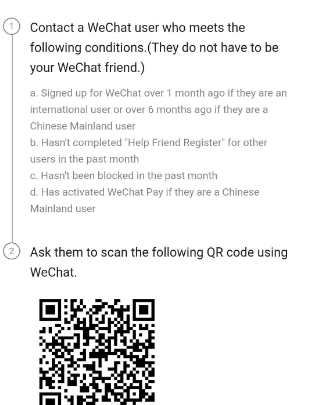
The only small hiccup? When you sign up, WeChat may ask you to activate your account with a referral from an existing user.
Money and Payment: How Do You Pay in China?
China’s official currency is the Renminbi (RMB), also called the Yuan, with the symbol ¥. As a rough reference, 1 USD ≈ 7 RMB and 1 EUR ≈ 8 RMB.
So… do people in China use cash, debit cards, or credit cards? Honestly — not really.
China is basically cashless.
Even beggars accept donations via WeChat Pay and Alipay.
Street markets, food stalls, small shops — many of them only accept mobile payments.
WeChat Pay & Alipay (This Is What Everyone Uses)

You might still hear travel agencies say, “Don’t bother downloading WeChat, you need a Chinese bank account.” That used to be true, but not anymore.
 Good news: You can now link international credit cards to WeChat Pay and Alipay. And let’s be honest, you can’t really experience China properly without WeChat anyway.
WeChat Pay is built directly into the WeChat app, while Alipay is a separate app. These two apps handle almost all daily payments in China, from 1 RMB to 10,000 RMB and beyond. That’s how powerful and common they are.
Whether you’re ordering food, buying fruit at a local market, paying a taxi driver, purchasing attraction tickets, or shopping for souvenirs, having the right apps ready on your phone is essential in China. The good news? As long as your payment is under a certain threshold (currently ¥200), no extra transaction fees are charged—win-win.
AliPay
AliPay is the top choice for foreigners, and not just for payments. It’s hands-down one of the most useful apps for traveling in China. Inside AliPay, you’ll find a whole ecosystem of mini-apps that let you:
- Use public transportation cards
- Book bike-sharing services
- Access translation tools
- Purchase eSIMs
- Book flights, trains, and hotels via Trip.com
- Scan restaurant QR codes and order directly to your table
In short: AliPay can pretty much run your entire trip.
WeChat Pay
WeChat Pay offers some similar features, but AliPay is more all-in-one. That said, WeChat Pay does have two major advantages:
- It allows you to link American Express cards (AliPay currently only accepts Visa and MasterCard).
- It is more widely accepted, especially by small vendors and local businesses.
The Catch with WeChat Pay
Here’s where things get a bit tricky. Many small vendors using WeChat Pay are registered as “individuals” rather than “businesses.” When you pay them, it’s technically treated like sending a personal gift. Unfortunately, these payments cannot be made using a linked credit or debit card. They must come from a WeChat balance.
For non-Chinese residents, setting up a WeChat balance is hard—but not impossible. You can ask politely ask someone you trust, like a homestay host or a local friend, to take cash and send you a WeChat balance in return. If you go this route, be kind and add a small tip as commission.
Credit Cards 
Credit cards aren’t widely accepted, especially at small local restaurants, cafés, or shops. You’ll usually only be able to use them at international hotels, luxury malls, and big brand stores. Don’t rely on cards alone.
Cash for Emergencies
While China runs mostly cash-free, carrying a small amount of cash can still be useful, especially in remote areas or if your WeChat Pay or Alipay suddenly doesn’t work. If you need to exchange money, banks and official exchange counters usually offer the best rates.
Money Exchange & Transfers
If you’re looking for smooth transfers and decent exchange rates, Wise is one of the best options. Formerly known as TransferWise, it’s an online platform for international transfers and currency exchange with low fees and great rates.
Check it out here: https://wise.prf.hn/l/AJbWLPg/
Bottom line: Install WeChat and Alipay before you arrive. It’ll save you time, stress, and a lot of awkward moments at the checkout counter.
Getting Around China: Trains and Flights
Traveling around China can feel overwhelming at first, but once you get the hang of it, it’s incredibly efficient. Between its high-speed rail network, domestic flights, and local transport, China offers multiple ways to move across provinces without breaking the bank or wasting time.
China is home to the world’s longest and most extensive high-speed rail (HSR) network, accounting for more than two-thirds of the global total. To put that in perspective, it’s almost hard to imagine the sheer scale of this network. High-speed trains regularly travel 250–350 km/h, and the network connects nearly every major city, from Beijing and Shanghai to smaller provincial hubs.
China also pioneered the commercial high-speed maglev train, located in Shanghai. Using magnetic levitation technology, it cruises at 300 km/h while gliding silently above the tracks, a truly futuristic experience.
In my experience as an expat living in China, trains are not just efficient, they’re often better than flying for domestic travel.
Where to buy and book tickets
Trains 
Trains are one of the best ways to travel between cities in China. They’re fast, comfortable, affordable, and way more pleasant than flying on short routes.
You can book train tickets in a few ways:
- 12306 (Official Railway Website)
This is the one and only official website for all train tickets in China. It’s reliable and comprehensive, but let’s be honest — the user experience isn’t very foreigner-friendly. It works, but takes some patience.https://www.12306.cn/en/ - Trip.com (Best for International Travelers)
Much easier to use, designed with Western travelers in mind, and prices are the same as the official site. On top of that, Trip.com offers solid English customer service, which is a lifesaver if something goes wrong. https://www.trip.com/t/M56vsifRnS2 - Train Stations / Local Ticket Offices
The old-school option still works. Tickets usually go on sale 15 days before departure. Just remember. Skip the self-service machines (they only accept Chinese IDs. Expect a long queue. And yes… 99.9% of staff won’t speak English
Air Travel 
China is huge, so at some point, flying is unavoidable. Most major cities have airports with both domestic and international connections.
You can book directly with airlines, or through WeChat and Alipay, but for foreigners, those options aren’t always smooth. Many local booking platforms are entirely in Chinese, which can be frustrating.
- Trip.com (Again, the Best Choice)
Trip.com is actually a Chinese company that expanded globally, which means it has full access to local flights, trains, hotels, and travel resources, often at the best prices. The booking system is super easy to use, even if you don’t speak Chinese. https://www.trip.com/t/SEXdyXT5nS2
Bottom line: use trains for mid-distance trips, flights for long distances, and mobile apps for everything else. China’s transport system is insanely efficient once you know how to use it.
Getting Around the City: Public Transportation
Getting around Chinese cities using public transportation is surprisingly easy, extremely affordable, and highly efficient, even for first-time visitors.
One of the biggest advantages of public transportation in China is the cost. It’s honestly the cheapest urban transit system I’ve personally experienced anywhere in the world. A big reason for this is that public transport in China is largely state-run, rather than privatized like in countries such as Thailand or the Philippines. This allows prices to remain capped, stable, and affordable for everyone.
 :
: :
:

 :
:SIM Cards in China
Getting a SIM card in China is pretty easy, and the most convenient place to buy one is at international airports. China has three main telecom providers: China Telecom, China Unicom, and China Mobile.
For most travelers, China Unicom is usually the go-to option. The differences between providers aren’t huge, but China Unicom tends to work better with a wider range of foreign phones, which is why many tourists choose it. That said, some insiders (including me  ) actually prefer China Mobile, but if you don’t want to overthink it, China Unicom is a safe bet.
If you like to be extra prepared and want your data working the moment you land, an eSIM is a great option. Just make sure your phone supports eSIM before buying. Prices and coverage are usually similar, so honestly, just pick the cheapest one that fits your trip.
Lately, one of the most popular among business or holiday travelers and international students is one that has built-in access to Western apps, so you don’t need a VPN.
- Holafly: get 5% discount with my link – more information here
- Trip.com: Special offers with my affiliate link -for more information click here
VPNs in China (Yes, You Need One)
Check my post for How To Access Blocked Websites and Apps in China.
Now, a heads-up before you land. The moment you’re ready to text your friends on WhatsApp, post on Instagram, check Google Maps, or see what @chinaeducations just posted you will get a surprise  .
.
In China, most foreign apps and websites like Google, Facebook, Instagram, TikTok, and many others are blocked by the Great Firewall.
But don’t panic, we’ve got you covered. The solution is simple: install a VPN before you arrive.
What Is a VPN?
A VPN (Virtual Private Network) encrypts your internet traffic and routes it through servers outside China. In simple terms, it hides what you’re doing online and makes it look like you’re browsing from another country, so blocked apps work normally.
Why VPN Choice Matters in China
Not all VPNs work here. In China, choosing the right VPN is crucial.
- First, it needs to actually work in China and bypass censorship
- Second, a bad VPN can put your personal data at risk
- And yes, unreliable VPNs can even cause legal or technical headaches — not what you want on vacation
The Reality (Honest Talk)
Picking a VPN can get very technical, so I’ve done the homework for you. The VPNs I recommend are tested and currently working in China.
That said, full honesty here: the Great Firewall updates all the time. Any VPN claiming to work forever is lying. That’s why I focus on VPNs that:
- Update quickly when blocks change
- Have responsive customer support
- Offer refunds when things stop working
- Install it before you arrive, thank me later

VPN’s to TRY:
- Astrill VPN is one of the most popular VPNs to use in China. You can check why I’ve been using Astrill for over 11 years; the only thing is that prices aren’t accessible like the others. You can check more in this video.
- Try Astrill VPN Risk-Free: https://www.astrill.com/a/iewtsmg3g7sv
- Express VPN: https://expressvpn.com
- Veee VPN: https://veee329.vip
- Surf Shark VPN: https://surfshark.com
- NordVPN: https://nordvpn.com
Finding Deodorant in China: What to Know
One small but surprisingly common concern for visitors to China is finding deodorant. While personal hygiene standards are high, deodorant simply isn’t a daily-use product for most locals, which makes it harder to find compared to Western countries.
The good news is that deodorant is available; you just need to know where to look and what to say.
How to Say “Deodorant” in Chinese
If you’re asking in-store or searching online, here are the most useful terms:
- Deodorant: 除臭剂 (chú chòu jì)
- Underarm deodorant: 腋下除臭剂 (yè xià chú chòu jì)
- Roll-on deodorant: 滚珠除臭剂 (gǔn zhū chú chòu jì)
Showing these words on your phone or typing them directly into an app search bar usually works better than trying to explain verbally.
Where to Buy Deodorant in China
- Watsons (屈臣氏):
This is your most reliable option. Watsons has a recognizable indigo-blue storefront and logo and is widely available in major and mid-sized cities. Selection is limited but consistent.

- Convenience Stores:
Larger FamilyMart and 7-Eleven locations sometimes stock deodorant, though availability varies by location.

- International Supermarkets:
Chains like Walmart and Carrefour (where still operating) often carry imported personal care products, including deodorant.
- Delivery Apps (Very Convenient):
If you’ve downloaded Meituan (美团) or Ele.me (饿了么), you can also search for deodorant and have it delivered directly to your hotel or apartment, often within 30–60 minutes.
Just paste 除臭剂 into the search bar and filter by pharmacies or supermarkets.


This option is especially helpful if you don’t feel like running around multiple stores or don’t want to navigate everything in person.